Climate Action Plan: Federal Government’s $200 Billion Commitment
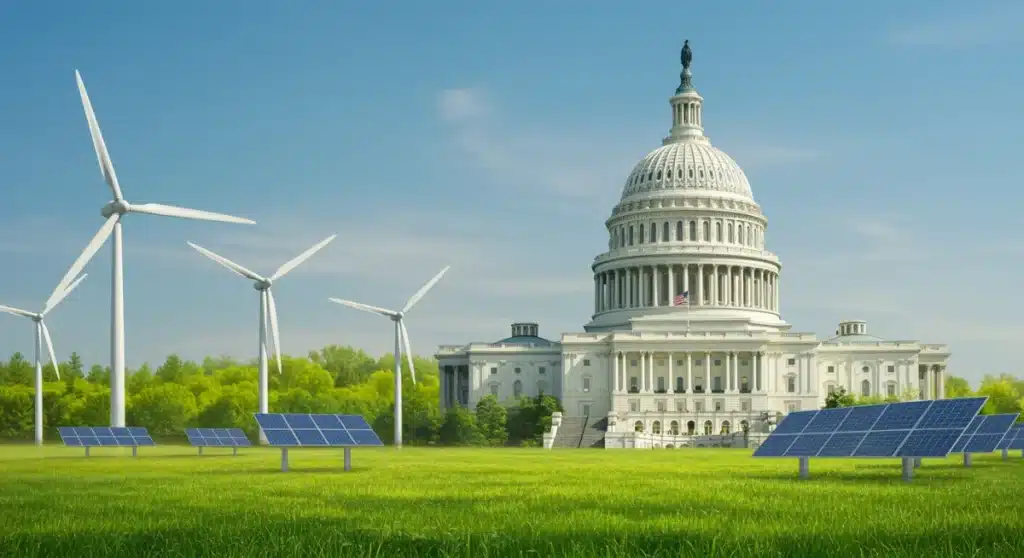
The federal government has unveiled a comprehensive $200 billion Climate Action Plan, focusing on four pivotal initiatives designed to significantly combat climate change by 2030, marking a critical step towards a sustainable future.
The United States federal government has announced a monumental commitment of $200 billion towards a comprehensive Climate Action Plan, targeting four key initiatives by 2030 to combat climate change. This significant investment underscores a renewed dedication to addressing one of humanity’s most pressing challenges, signaling a pivotal shift in national environmental policy and economic priorities. The ambitious plan aims to accelerate the transition to a sustainable future, fostering innovation and resilience across various sectors.
Understanding the Federal Climate Action Plan’s Vision
The newly unveiled federal climate action plan represents a strategic response to the escalating climate crisis, acknowledging the urgency required to mitigate its impacts. This plan is not merely a financial allocation; it embodies a holistic vision for a greener, more resilient America, aiming to integrate climate considerations into every facet of national policy and infrastructure development. It sets a clear path for reducing greenhouse gas emissions, enhancing natural carbon sinks, and preparing communities for the inevitable effects of climate change.
Defining the Scope and Ambition
The federal government’s commitment of $200 billion is earmarked for initiatives that are both broad in scope and ambitious in their objectives. The plan seeks to achieve measurable reductions in emissions by 2030, aligning with global efforts to limit global warming. It emphasizes a science-based approach, leveraging the latest research and technological advancements to ensure that investments yield the maximum environmental benefit.
- Significant reduction targets for greenhouse gas emissions.
- Integration of climate resilience into national infrastructure projects.
- Promotion of sustainable economic growth and job creation.
- Enhanced international cooperation on climate efforts.
This vision extends beyond environmental protection, aiming to stimulate economic growth through green jobs and technological innovation. It recognizes that effective climate action can also be a powerful engine for prosperity, driving advancements in renewable energy, energy efficiency, and sustainable agriculture. The plan is designed to be inclusive, ensuring that the benefits of climate action are shared across all communities, particularly those historically marginalized.
Initiative 1: Accelerating Renewable Energy Deployment
A cornerstone of the federal climate action plan is the massive investment in accelerating the deployment of renewable energy technologies. This initiative is crucial for transitioning away from fossil fuels and reducing the carbon footprint of the nation’s energy supply. The $200 billion allocation will significantly boost projects related to solar, wind, geothermal, and hydroelectric power, making clean energy more accessible and affordable for all Americans.
Expanding Solar and Wind Infrastructure
The plan prioritizes the expansion of utility-scale solar and wind farms, alongside incentives for residential and commercial installations. This includes funding for research and development to improve efficiency and storage capabilities, addressing the intermittency challenges often associated with renewable sources. The goal is to make renewable energy the dominant source of electricity generation within the next decade.
- Development of new solar and wind energy projects across the country.
- Investment in advanced battery storage solutions for grid stability.
- Streamlining permitting processes for renewable energy infrastructure.
- Training programs for a skilled renewable energy workforce.
Furthermore, the initiative aims to modernize the national grid to accommodate a higher influx of renewable energy, ensuring reliability and efficiency. This will involve smart grid technologies and enhanced transmission lines capable of distributing clean energy from production sites to consumption centers effectively. The federal government recognizes that a robust and resilient energy infrastructure is paramount to achieving its climate goals.
Initiative 2: Enhancing Energy Efficiency and Conservation
Beyond generating clean energy, the federal climate action plan places a strong emphasis on reducing overall energy consumption through enhanced efficiency and conservation measures. This initiative acknowledges that the cheapest and cleanest energy is the energy not used. By investing in programs that promote energy-efficient buildings, transportation, and industrial processes, the plan aims to significantly lower demand and reduce waste across the economy.
Transforming Buildings and Transportation
A substantial portion of the funding will go towards retrofitting existing buildings with energy-efficient technologies, such as improved insulation, smart thermostats, and energy-saving appliances. Additionally, the plan supports the widespread adoption of electric vehicles (EVs) through charging infrastructure development and consumer incentives. This dual approach tackles two of the largest sectors for energy consumption.
The federal government will also fund research into next-generation energy-efficient materials and designs, pushing the boundaries of what is possible in sustainable construction. This includes exploring innovative solutions for heating, cooling, and lighting that minimize environmental impact while maximizing comfort and cost savings for consumers. The goal is to create a culture of conservation that permeates all levels of society, from individual households to large corporations.
Initiative 3: Investing in Carbon Capture and Sequestration Technologies
Recognizing that some sectors are difficult to decarbonize entirely, the federal climate action plan allocates significant resources to carbon capture, utilization, and sequestration (CCUS) technologies. This initiative focuses on removing carbon dioxide directly from industrial emissions and the atmosphere, storing it permanently, or converting it into useful products. It represents a critical tool in achieving net-zero emissions by 2050.

Advancing Direct Air Capture and Industrial Solutions
Funding will support pilot projects for direct air capture (DAC) facilities, which pull CO2 directly from the ambient air. Simultaneously, investments will be made in CCUS technologies for heavy industries like cement and steel production, where emissions are particularly challenging to abate. The aim is to scale these technologies to a point where they are economically viable and widely deployable.
- Research and development for next-generation carbon capture materials.
- Deployment of large-scale CCUS projects in industrial hubs.
- Exploration of safe and effective geological storage sites for captured carbon.
- Incentives for industries to adopt carbon reduction technologies.
The plan also includes provisions for monitoring and verifying the effectiveness and safety of carbon storage sites, ensuring that captured carbon remains out of the atmosphere permanently. This initiative is seen as a crucial bridge technology, allowing for continued economic activity in hard-to-abate sectors while the transition to fully renewable processes matures.
Initiative 4: Fostering Climate Resilience and Adaptation
The fourth key initiative of the federal climate action plan focuses on building climate resilience and enhancing adaptation capabilities across the nation. Even with aggressive mitigation efforts, some degree of climate change impact is unavoidable. This initiative aims to protect communities, infrastructure, and natural ecosystems from the increasing frequency and intensity of extreme weather events, sea-level rise, and other climate-related hazards.
Protecting Coastal Communities and Critical Infrastructure
Funding will be directed towards projects that strengthen coastal defenses, restore natural flood barriers like wetlands, and develop early warning systems for extreme weather. Critical infrastructure, including power grids, transportation networks, and water systems, will be upgraded to withstand climate shocks. The plan emphasizes proactive measures to minimize damage and ensure rapid recovery.
Beyond physical infrastructure, the initiative also focuses on community-level preparedness, providing resources for local governments to develop climate adaptation plans, conduct vulnerability assessments, and implement nature-based solutions. This includes promoting sustainable land use practices and protecting biodiversity, which plays a vital role in ecosystem resilience. The federal government is committed to ensuring that all communities have the tools and resources they need to thrive in a changing climate.
Economic and Social Impacts of the $200 Billion Investment
The federal government’s $200 billion commitment to its climate action plan is projected to have profound economic and social impacts across the United States. This investment is not just an environmental imperative but also a significant economic stimulus, poised to create millions of new jobs, drive technological innovation, and enhance the nation’s global competitiveness in green industries. The ripple effects will be felt across diverse sectors, transforming local economies and improving public health.
Job Creation and Green Economic Growth
The expansion of renewable energy, energy efficiency upgrades, and the development of new climate technologies will necessitate a skilled workforce. This plan includes provisions for job training and workforce development programs, ensuring that Americans are prepared for the jobs of the future. Estimates suggest substantial job creation in construction, manufacturing, engineering, and research fields. Furthermore, investments in local infrastructure projects will provide immediate economic benefits to communities nationwide.
- Creation of high-paying jobs in renewable energy and green technology.
- Stimulation of local economies through infrastructure development.
- Increased competitiveness of American industries in the global green market.
- Reduced reliance on volatile fossil fuel markets, leading to greater energy security.
Socially, the plan aims to address environmental justice by prioritizing investments in disadvantaged communities that have historically borne a disproportionate burden of pollution. Improved air and water quality, reduced exposure to hazardous substances, and increased access to green spaces will lead to better public health outcomes. The federal government is committed to ensuring that the transition to a clean energy economy is equitable and inclusive for all segments of society.
Challenges and the Path Forward for Climate Action
While the federal climate action plan outlines an ambitious and necessary path, its implementation will undoubtedly face various challenges. These include securing sustained political will, overcoming technological hurdles, ensuring equitable distribution of benefits, and managing the transition for industries reliant on fossil fuels. Navigating these complexities will require continuous collaboration, innovation, and adaptability from all stakeholders.
Overcoming Implementation Hurdles
One of the primary challenges will be the coordination across multiple federal agencies, state governments, and private sector entities to ensure a cohesive and efficient deployment of funds and projects. Permitting processes, land use regulations, and community engagement will also need to be streamlined to avoid delays. Public support and understanding of the plan’s long-term benefits will be crucial for its success.
Technological advancements are ongoing, but scaling up new solutions like advanced CCUS and grid modernization will require continued research and significant private investment. The federal government’s role will be to de-risk these investments and foster an environment conducive to innovation. Addressing the concerns of workers and communities in fossil fuel-dependent regions will also be vital, through retraining programs and economic diversification initiatives. The path forward demands a concerted national effort, but the $200 billion commitment signals a strong foundation for achieving the ambitious climate goals by 2030 and beyond.
| Key Initiative | Brief Description |
|---|---|
| Renewable Energy | Accelerating solar, wind, and other clean energy deployment to reduce fossil fuel reliance. |
| Energy Efficiency | Investing in building retrofits, EV infrastructure, and conservation to lower energy demand. |
| Carbon Capture | Developing and deploying technologies to remove carbon from industrial emissions and the atmosphere. |
| Climate Resilience | Strengthening infrastructure and communities against extreme weather and climate impacts. |
Frequently Asked Questions About the Climate Action Plan
The primary goal is to combat climate change by significantly reducing greenhouse gas emissions and building national resilience to climate impacts. It aims to achieve measurable progress by 2030 through strategic investments in key environmental initiatives.
The federal government has committed $200 billion to this Climate Action Plan. The initiatives outlined are designed to achieve substantial progress and impact by the year 2030, setting clear short-term objectives.
The four key initiatives are accelerating renewable energy deployment, enhancing energy efficiency and conservation, investing in carbon capture and sequestration technologies, and fostering climate resilience and adaptation across the nation.
The plan is expected to create millions of new jobs in green industries, including construction, manufacturing, and technology. It aims to stimulate economic growth, enhance global competitiveness, and ensure a just transition for all communities.
Challenges include sustained political will, technological hurdles, equitable resource distribution, and managing the transition for fossil fuel-dependent industries. Effective coordination and public support will be crucial for success.
Conclusion
The federal government’s commitment of $200 billion to its Climate Action Plan by 2030 marks a pivotal moment in the nation’s fight against climate change. Through four interconnected and ambitious initiatives—accelerating renewable energy, enhancing efficiency, investing in carbon capture, and building resilience—the plan lays a robust foundation for a sustainable and prosperous future. This strategic investment not only aims to mitigate environmental risks but also to catalyze economic growth, create jobs, and foster a more equitable society. While challenges lie ahead, the comprehensive nature of this plan and the substantial financial backing demonstrate a clear and determined path towards a greener, more resilient America.
Autor