Portfolio Rebalancing Q1 2025: Maintain Risk Tolerance

Portfolio rebalancing Q1 2025 is essential for investors to realign their asset allocations with their target risk profiles and long-term financial objectives, particularly after year-end market shifts.
As we step into 2025, the financial landscape continues its dynamic evolution, making proactive investment management more critical than ever. For many, the start of a new quarter, especially the first of the year, presents an opportune moment to assess and adjust their financial holdings. This guide focuses on portfolio rebalancing Q1 2025, offering a clear roadmap to ensure your investment strategy remains aligned with your individual risk tolerance and long-term objectives. Understanding how to effectively rebalance isn’t just about chasing returns; it’s about safeguarding your financial future and navigating market volatility with confidence.
Understanding portfolio rebalancing
Portfolio rebalancing is the process of realigning the weightings of a portfolio’s assets. It involves periodically buying or selling assets to maintain an original or desired level of asset allocation. Over time, market fluctuations can cause your portfolio’s initial asset allocation to drift, leading to an unintended increase or decrease in risk exposure. Rebalancing ensures your portfolio stays consistent with your risk tolerance and investment goals.
Think of it as recalibrating your financial compass. Without regular adjustments, your portfolio might veer off course, potentially exposing you to more risk than you’re comfortable with or limiting your growth potential. This practice is not about market timing, but rather about discipline and adherence to a well-thought-out investment plan. It helps in systematically locking in gains from outperforming assets and buying more of underperforming ones at a lower price.
Why rebalance in Q1 2025?
The first quarter of a new year is often an ideal time for rebalancing. The previous year’s market performance can significantly alter your portfolio’s composition. For instance, a strong equity market in 2024 might mean your stock allocation has grown beyond its target, increasing your overall portfolio risk. Conversely, if bonds performed well, your fixed-income allocation might be overweight.
- Post-Year-End Reflection: Q1 allows for a comprehensive review of the previous year’s performance and market trends.
- New Financial Goals: It’s a natural time to set or revisit financial goals for the coming year.
- Tax Considerations: Rebalancing in Q1 can also align with tax planning strategies, especially if you’re considering tax-loss harvesting from the previous year.
Ultimately, understanding portfolio rebalancing is the first step toward maintaining a healthy, goal-oriented investment strategy. It’s a proactive measure that keeps your financial plan on track, regardless of market turbulence. Taking the time to perform this crucial task in Q1 2025 can set a strong foundation for the rest of the year.
Assessing your current risk tolerance
Before you even consider adjusting your portfolio, a crucial step is to honestly assess your current risk tolerance. This isn’t a one-time exercise; your comfort level with risk can change over time due to life events, financial circumstances, or even psychological factors. For portfolio rebalancing Q1 2025, it’s vital to ensure your investments still mirror the level of risk you are willing and able to take.
Risk tolerance is a deeply personal metric. It encompasses your capacity to withstand potential losses and your emotional response to market volatility. A high-risk tolerance might mean you’re comfortable with significant market swings for the potential of higher returns. A low-risk tolerance, on the other hand, suggests a preference for capital preservation and less volatile investments, even if it means lower potential gains.
Factors influencing risk tolerance
Several elements contribute to your personal risk profile. Understanding these can help you make a more informed decision about your portfolio’s structure.
- Time Horizon: Younger investors with longer time horizons often have a higher risk tolerance, as they have more time to recover from market downturns.
- Financial Stability: Individuals with stable income, emergency funds, and minimal debt may tolerate more risk.
- Investment Knowledge: A better understanding of market dynamics and investment vehicles can lead to a higher comfort level with risk.
- Personality: Some individuals are naturally more risk-averse than others, regardless of their financial situation.
It’s important to differentiate between risk tolerance and risk capacity. Risk capacity refers to the amount of financial risk you can afford to take without jeopardizing your financial goals. While you might be comfortable with high risk (tolerance), your financial situation might only allow for a moderate level of risk (capacity). Both must be considered when determining your ideal asset allocation.
Re-evaluating your risk tolerance in Q1 2025 provides an opportunity to ensure your investment strategy is not just about numbers, but also about your personal comfort and financial well-being. This self-assessment is the bedrock of effective portfolio management.
Establishing your target asset allocation
Once you’ve thoroughly assessed your current risk tolerance, the next critical step for portfolio rebalancing Q1 2025 is to establish or reaffirm your target asset allocation. This allocation is the specific mix of different asset classes, such as stocks, bonds, and cash, that you aim to maintain in your portfolio. It’s a strategic decision that directly reflects your risk tolerance, time horizon, and financial objectives.
Your target asset allocation isn’t a static concept; it’s a dynamic blueprint that should evolve as your life circumstances and market conditions change. For example, a young investor saving for retirement might opt for a more aggressive allocation, perhaps 80% stocks and 20% bonds, leveraging their long time horizon. In contrast, someone nearing retirement might shift to a more conservative 40% stocks and 60% bonds to preserve capital and generate income.
Common asset allocation models
There are various models and rules of thumb that can guide your target asset allocation, though these should always be personalized:
- Age-Based Allocation: A common guideline is to subtract your age from 100 or 110 to determine the percentage of your portfolio that should be in stocks. The remainder would typically be in bonds.
- Risk-Based Allocation: This model directly uses your assessed risk tolerance. Aggressive investors might lean heavily towards equities, while conservative investors prioritize fixed income.
- Goal-Based Allocation: Different financial goals (e.g., buying a house in 5 years vs. retirement in 30 years) may require different asset allocations, even within the same individual’s overall financial plan.
It’s important to remember that these are guidelines, not rigid rules. Your personal financial situation, income stability, and comfort with market fluctuations should ultimately dictate your specific allocation. Consulting with a financial advisor can provide invaluable insights and help you craft an allocation that is truly tailored to your needs.
Defining your target asset allocation provides a clear benchmark against which to measure your current portfolio. This benchmark is what enables effective rebalancing, ensuring your investments are always working towards your financial goals while respecting your risk boundaries.
Methods for effective rebalancing
With your risk tolerance assessed and target asset allocation firmly in mind, the next practical step for portfolio rebalancing Q1 2025 involves choosing and implementing a rebalancing method. There isn’t a single ‘best’ way to rebalance; the most effective approach depends on your personal preferences, portfolio size, and market outlook. However, consistency is key, regardless of the method you choose.
Rebalancing generally involves either selling assets that have grown above their target allocation and buying assets that have fallen below, or simply directing new contributions towards underperforming assets to bring them back into line. The choice between these two approaches often comes down to tax implications and the availability of new capital.
Common rebalancing strategies
Here are the primary methods investors typically use to rebalance their portfolios:
- Time-Based Rebalancing: This is the simplest and most common method. You choose a specific frequency (e.g., quarterly, semi-annually, annually) and realign your portfolio to its target allocation at those set intervals. Q1 2025 is a prime example of a time-based rebalancing opportunity.
- Percentage-Based Rebalancing: This method triggers a rebalance when an asset class deviates by a certain percentage from its target allocation. For example, if your target for stocks is 60% and it drifts to 65% or 55%, you would rebalance. This can be more dynamic but also more frequent than time-based rebalancing.
- Cash Flow Rebalancing: Instead of selling assets, this method uses new contributions (e.g., from savings or dividends) to buy more of the underperforming asset classes, gradually bringing the portfolio back to its target. This is particularly tax-efficient as it avoids selling assets that might incur capital gains tax.
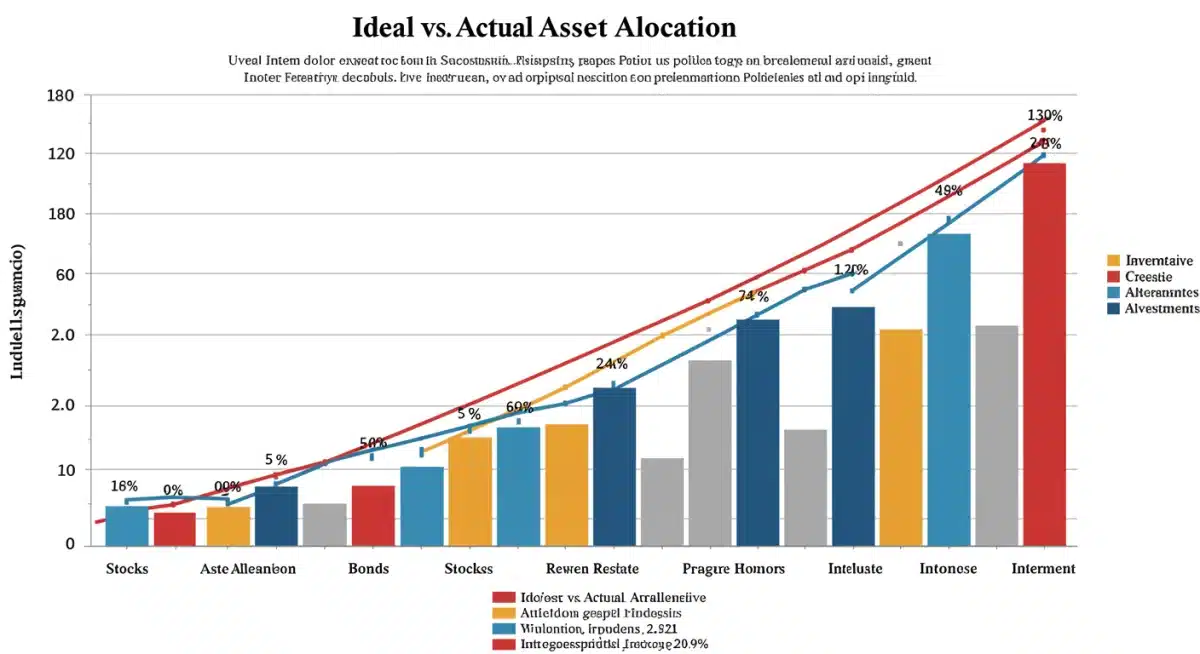
Each method has its advantages. Time-based rebalancing offers simplicity and predictability. Percentage-based rebalancing is more responsive to market movements but requires more frequent monitoring. Cash flow rebalancing is excellent for avoiding taxes on gains and continuously investing new capital wisely.
Regardless of the strategy, the goal remains the same: to ensure your portfolio’s asset mix continues to reflect your desired risk level and long-term financial objectives. Implementing a consistent rebalancing approach is a cornerstone of prudent investment management.
Practical steps for Q1 2025 rebalancing
Now that you understand the ‘why’ and ‘how’ of rebalancing, let’s look at the practical steps to execute your portfolio rebalancing Q1 2025. This process requires a systematic approach to ensure accuracy and alignment with your financial plan. Don’t rush through these steps; thoughtful execution can significantly impact your long-term investment success.
The first step involves gathering all necessary information. This means compiling statements from all your investment accounts, including brokerage accounts, retirement accounts (401(k)s, IRAs), and any other investment vehicles. Having a complete picture of your holdings is essential for an accurate assessment of your current asset allocation.
Step-by-step rebalancing guide
Follow these steps to efficiently rebalance your portfolio:
- List All Holdings: Create a comprehensive list of all your assets across all accounts. Categorize them by asset class (e.g., U.S. stocks, international stocks, bonds, real estate, cash equivalents).
- Calculate Current Allocation: Determine the percentage each asset class represents in your total portfolio. This will highlight any deviations from your target allocation.
- Identify Deviations: Compare your current allocation percentages against your predetermined target allocation. Note which asset classes are overweighted and which are underweighted.
- Formulate a Plan: Decide how you will bring your portfolio back into alignment. Will you sell overperforming assets and buy underperforming ones? Or will you use new contributions to rebalance? Consider tax implications, especially for taxable accounts.
- Execute Trades: Implement your rebalancing plan. This might involve placing buy and sell orders through your brokerage or adjusting contributions to your retirement accounts.
- Document and Review: Keep a record of your rebalancing actions. Periodically review your portfolio’s performance and prepare for the next rebalancing cycle.
When executing trades, be mindful of transaction costs and potential tax consequences. For assets held in tax-advantaged accounts like 401(k)s and IRAs, rebalancing typically doesn’t trigger immediate tax events. However, in taxable accounts, selling appreciated assets can result in capital gains taxes. Consider holding periods to potentially qualify for lower long-term capital gains rates.
By following these practical steps, you can confidently undertake your Q1 2025 portfolio rebalancing, ensuring your investments continue to serve your financial goals effectively and maintain your desired risk profile.
Common pitfalls and how to avoid them
While portfolio rebalancing Q1 2025 is a straightforward concept, investors often encounter common pitfalls that can undermine its effectiveness. Being aware of these traps can help you navigate the rebalancing process more smoothly and maintain the integrity of your investment strategy. The goal is to avoid emotional decisions and stick to a disciplined, rational approach.
One of the most frequent mistakes is letting emotions drive investment decisions. When a particular asset class has performed exceptionally well, there’s a natural temptation to let it run, hoping for continued outperformance. Conversely, underperforming assets might be sold off prematurely out of frustration. Rebalancing, by its nature, encourages selling high and buying low, which can feel counterintuitive but is a cornerstone of long-term success.
Mistakes to sidestep during rebalancing
- Emotional Trading: Allowing fear or greed to dictate your rebalancing decisions. Stick to your predetermined target allocation, even when it feels uncomfortable.
- Ignoring Tax Implications: Failing to consider the tax consequences of selling appreciated assets in taxable accounts. Utilize tax-advantaged accounts for rebalancing whenever possible, or use cash flow rebalancing to minimize taxable events.
- Over-Rebalancing: Rebalancing too frequently, leading to excessive transaction costs and potentially diluting long-term gains. Choose a consistent schedule or percentage band and stick to it.
- Lack of Documentation: Not keeping records of your rebalancing actions and rationale. Good record-keeping helps you track your progress and learn from past decisions.
- Ignoring Life Changes: Failing to adjust your target asset allocation when significant life events (e.g., marriage, new child, job change, retirement) alter your risk tolerance or financial goals.
Another pitfall is trying to time the market. Rebalancing is a strategic, not a tactical, move. It’s about maintaining your desired risk profile, not predicting market movements. Attempting to delay rebalancing because you believe an asset class will continue to rise or fall can lead to further deviations from your target and greater risk exposure.
By being mindful of these common mistakes, you can approach your Q1 2025 portfolio rebalancing with greater clarity and discipline, safeguarding your investments against impulsive errors and ensuring they remain aligned with your long-term financial vision.
The long-term benefits of consistent rebalancing
While the immediate impact of portfolio rebalancing Q1 2025 might seem subtle, the long-term benefits of consistently rebalancing your portfolio are profound. This disciplined practice is much more than just an administrative task; it’s a strategic pillar of successful investing that helps you stay on track toward your financial aspirations, regardless of market volatility.
One of the primary long-term advantages is risk management. By regularly realigning your portfolio to your target asset allocation, you prevent any single asset class from becoming disproportionately large and increasing your overall risk exposure. This proactive approach helps to mitigate the impact of significant downturns in specific market segments, protecting your capital over the long haul.
Key long-term advantages
- Risk Control: Keeps your portfolio’s risk level consistent with your comfort zone, preventing unexpected exposure to market downturns.
- Buy Low, Sell High Mechanism: Forces you to sell assets that have performed well (selling high) and buy assets that have underperformed (buying low), often leading to enhanced returns over time.
- Emotional Discipline: Instills a disciplined approach to investing, removing emotional decision-making from the equation and encouraging adherence to a predefined strategy.
- Goal Alignment: Ensures your investment strategy remains aligned with your evolving financial goals and life circumstances, making necessary adjustments as your needs change.
- Compounding Returns: By maintaining an optimal asset allocation, you are better positioned to capture compounding returns over several market cycles.
Consider the psychological benefit. Knowing that your portfolio is regularly reviewed and adjusted to fit your risk profile can provide significant peace of mind. This reduces the urge to make impulsive, fear-driven decisions during volatile periods, which are often detrimental to long-term wealth accumulation.
Ultimately, consistent rebalancing is about playing the long game. It’s a testament to the power of discipline, strategic planning, and patience in the world of investing. By making rebalancing a regular part of your financial routine, especially starting with Q1 2025, you are setting yourself up for greater financial resilience and a higher probability of achieving your long-term investment objectives.
| Key Point | Brief Description |
|---|---|
| Assess Risk Tolerance | Re-evaluate your comfort with investment risk due to life changes or market shifts. |
| Set Target Allocation | Define the ideal mix of assets (stocks, bonds, cash) aligned with your goals. |
| Choose Rebalancing Method | Select between time-based, percentage-based, or cash flow rebalancing strategies. |
| Avoid Common Pitfalls | Guard against emotional trading, neglecting taxes, or over-rebalancing. |
Frequently Asked Questions
Q1 2025 is crucial because it follows the previous year’s market performance, which can significantly alter asset allocations. It’s an ideal time for review, realigning with new financial goals, and considering tax implications from the prior year’s activity.
The frequency depends on your chosen method. Time-based rebalancing usually occurs annually or semi-annually. Percentage-based rebalancing triggers when an asset class deviates by a set percentage, which could be more frequent. Consistency is more important than exact timing.
Selling appreciated assets in a taxable account can incur capital gains taxes. Short-term gains (assets held for less than a year) are taxed at ordinary income rates, while long-term gains (held over a year) are taxed at lower preferential rates. Consider tax-loss harvesting or cash flow rebalancing to mitigate this.
While rebalancing aims to control risk and optimize long-term returns, it might mean selling assets that are still appreciating. However, the primary goal is not to maximize short-term gains but to maintain your desired risk profile and prevent excessive concentration in any single asset class.
Yes, rebalancing becomes even more crucial as you approach retirement. It typically involves shifting towards a more conservative allocation to preserve capital and reduce volatility, ensuring your accumulated wealth is protected as your time horizon shortens.
Conclusion
The disciplined practice of portfolio rebalancing Q1 2025 is not merely an annual chore; it’s a fundamental aspect of sound financial management. By consistently assessing your risk tolerance, defining your target asset allocation, and applying a chosen rebalancing method, you empower your investment strategy to adapt to market changes while staying true to your personal financial goals. Avoiding common pitfalls and understanding the long-term benefits reinforces the importance of this proactive approach. As you navigate the financial landscape of 2025 and beyond, regular rebalancing will serve as a steadfast guide, helping you maintain control, mitigate risk, and ultimately achieve your desired financial outcomes with greater confidence.
Autor